Interview Spotlight: Amanda C. Bauch - Author of One Nation Under God: 40 Devotions for Patriotic Women

Earlier this year, author Amanda C. Bauch was honored by the Christian Book Excellence Awards for her impactful devotional, One Nation Under God: 40 Devotions for Patriotic Women. In a culture marked by fear, division, and political noise, Bauch offers Christian women a refreshingly biblical call to prayer, repentance, and steadfast faith.
Rooted deeply in Scripture rather than partisanship, Bauch's award-winning devotional reminds readers that true change begins first in the heart before God. In this conversation with the Christian Book Excellence Awards, Bauch shares how her upbringing in a military family shaped her faith and patriotism, why prayer is often forgotten in difficult times, and the hope Christians can hold onto for America’s future.
Q: Memorial Day is often about remembering sacrifice. As someone raised in a military family, how has that shaped both your faith and your love for America?
A: In my family, Memorial Day was about so much more than having a day off from work and spending time with family and friends, grilling meats, and splashing around in the pool. While all of those were often part of the day, the primary focus was
honoring and celebrating veterans.
From a very young age, I was a member of the American Legionettes, a drill team sponsored by our local American Legion, Henry Mosher Post 638. For many years, my adopted dad was our drill sergeant. On Memorial Day, we always marched in the parade in my small town. Before the parade, my family would drive to the Legion to meet with the rest of the team and their families. After practicing our routines, we’d caravan to the site where the parade began. Alongside Boy Scout troops, the high school marching band, baseball and softball teams, veterans’ organizations, and other groups, we’d wend along the parade route, which ended in the cemetery. Although I don’t recall many details of the ceremony that took place there, a couple of things are permanently etched in my mind.
“Taps” was always played on a trumpet. When the echo was performed, its haunting notes rolled around the hilly land, filling us with both pride and sadness for those who’d given their lives for our country.
A multi-gun salute was done at the end. As a small child, the blasts terrified me, and I’d squeeze my hands over my ears to block out the noise.
And usually, someone passed out from the heat and dehydration. Typically, it was someone from the marching band, as those thick polyester uniforms were heavy and oppressive.
After the parade, we’d return to the Legion, where they were preparing a delicious feast for everyone. We’d have water balloon fights and other fun activities.
Unfortunately, I wasn’t raised in a Christian home, so while my family taught me to be proud of and to love our country, they didn’t teach me to fear and love the Lord. That would come later in my life.
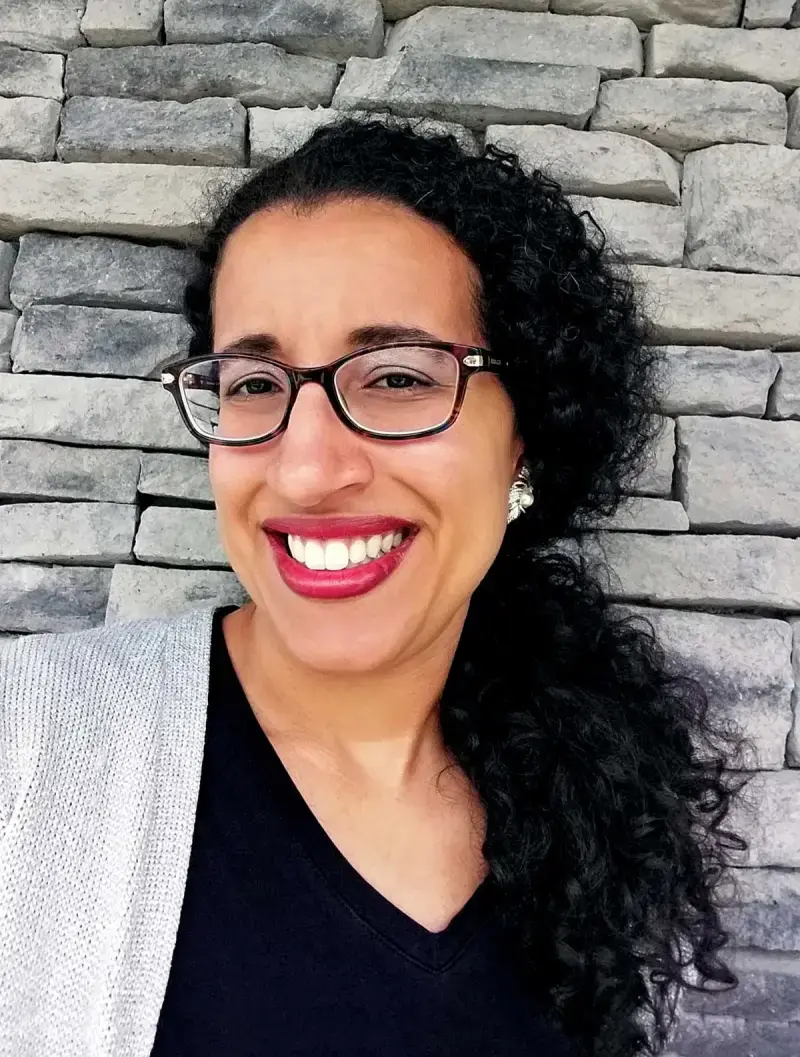
Even so, those foundational years of patriotism informed my understanding of the intersection of loving one’s nation and loving God. Because of my deep love for America, I’ve spent much time seeking God’s wisdom, particularly through Scripture, to better comprehend how to perceive what transpires in our country and how to effectively intercede on behalf of our leaders and fellow citizens.
Q: In One Nation Under God, you write that when everything feels like it’s “going off the rails,” God kept bringing you back to one simple response: pray. Why do you think prayer is so often the first thing we forget in difficult times?
A: I think the most prevalent reason is cultural. In America, we’re a nation of doers, fixers, problem solvers, and innovators. We highly value productivity and “progress.” Thus, being still and praying feels passive, like we’re not doing anything.
But praying is the single most active and “productive” thing we can do!
One example I love from the Bible is King Hezekiah, in 2 Kings 19. The Assyrians were plotting to attack Judah, and the king sent his officials to the prophet Isaiah, to seek a word from the Lord. Isaiah told them,
“‘Do not be afraid of what you have heard—those words with which the underlings of the king of Assyria have blasphemed me. Listen! When he hears a certain report, I will make him want to return to his own country, and there I will have him cut down with the sword’” (2 Kings 19:6–7 NKJV).
Sometime thereafter, the Assyrians’ leader dispatched a message telling Hezekiah not to listen to what God had promised, and that Jerusalem would fall to Assyria. Upon receiving this letter, Hezekiah “went up to the temple of the Lord and spread it out before the Lord. And Hezekiah prayed to the Lord” (2 Kings 19:14–15).
When Hezekiah’s nation and his people were threatened, he didn’t convene his counselors to strategize, mobilize his army, or evacuate the city. The very first thing he did was go before God and pray. It’s an awesome response and an incredible reminder that in any situation—especially difficulties—the first and best response should always be prayer.
Q: You wrote this devotional specifically for Christian women navigating fear, uncertainty, and division in today’s culture. What conversations with women impacted you most while writing this book?
A: In my vocation as a pastor’s wife, I have many deep, meaningful conversations with women about what’s on their hearts and minds. And I have many similar talks with my closest friends. Although I can’t recall any specific conversations off the top of my head, I can share composites:
Grandmothers and mothers are concerned that their grandchildren and children seem to be heavily influenced by the world, particularly through social media. They tell me their progeny are drifting from the faith, and they don’t know how to counteract that.
Some women feel that civil discourse has become the exception rather than the rule, and they’re unsure how to engage with people they disagree with. The divide between people groups—whether left versus right, male versus female, Baby Boomers versus Millennials, etc.—appear so vast and wide that bridging the gap seems impossible. These same women often cite the toxic media landscape that’s more preoccupied with sensationalizing and fear-mongering than reporting the truth.
Several women have expressed to me that they’re worried that if they speak God’s truth in love to their loved ones, they’ll be cut off and no longer have relationships with those individuals.
The primary theme among all of these conversations is relationships. As God created us, women are highly relational and nurturing. When we feel something threatens our ability to demonstrate this part of our nature, that understandably stirs up fear and uncertainty. The anxiety of losing contact with and access to family is real and palpable.
When we fiercely love others, it can be hard to keep in mind that our relationship with Jesus Christ must supersede all. He said, “‘My mother and My brothers are these who hear the word of God and do it’” (Luke 8:21). We don’t serve others well when we avoid speaking God’s truth in love and instead go along to get along.
Q: One of the strongest themes in your book is that real change starts with repentance and humility before God, not politics alone. What do you hope readers will personally walk away changed by after finishing these 40 devotions?
A: In biblical times, repentance was sometimes a public display. The Ninevites donned sackcloth and ashes after Jonah proclaimed God’s judgment over the city. Daniel fasted while in sackcloth and ashes, as he interceded for his people. Many other examples can be found throughout Scripture.
Joel 2:12–13 states, “‘Now, therefore,’ says the Lord, ‘Turn to Me with all your heart, with fasting, with weeping, and with mourning.’ So rend your heart, and not your garments; return to the Lord your God, for He is gracious and merciful, slow to anger, and of great kindness; and He relents from doing harm.”
Repentance always begins internally, and God’s utmost concern is our heart. Although we’re no longer required to perform external displays of repentance and humility, this passage from Joel indicates that fasting, weeping, and mourning are all appropriate responses to both individual and communal sin. And we can perform these acts as individuals or as a community of believers.
I believe that part of the reason our nation is in its current condition is because many Christians have kept silent about various topics due to fear of offending people and, more recently, fear of “cancellation.”
Additionally, we can be self-righteous and so focused on the specks in others’ eyes that we refuse to acknowledge the speck in our own eye. Our refusal to see how our sins are an impediment minimizes our ability to be effective and powerful intercessors on behalf of America.
I include myself in this admonition and have had to seek the Lord’s forgiveness for times He has given me opportunities to assert His truth, and I failed to do so. I’ve also had to repent for times I’ve felt that our leaders and certain groups of people were beyond God’s redemptive power.

After reading this devotional, first and foremost, I hope women will adopt a practice of praying daily for our nation. But I also hope they’ll see how the Bible equips us for any and every need we have and difficulty we face as American citizens.
Although times and circumstances change, human nature and sin never change, for there’s nothing new under the sun (Ecclesiastes 1:9). Our two most powerful weapons—God’s Word and prayer—can be wielded in the spiritual battle that continually wages
around us. In Jesus Christ, the victory is already won!
Q: If you could encourage Christians this Memorial Day with one message about faith, hope, and the future of our nation, what would it be?
A: Precisely what Paul commands in 1 Thessalonians 5:16–18:
“Rejoice always, pray without ceasing, give thanks in all circumstances; for this is the will of God in Christ Jesus for you.” We live in a country where we’re blessed with many freedoms, for which we can rejoice always. Yet we still have many challenges, which compels us to pray without ceasing. And we can give thanks in all circumstances, both good and bad—for, as Paul says, this is God’s will for us in Christ Jesus.
No matter what happens in both the short and long term in the United States, we can trust in God’s eternal and absolute truths. Jesus remains on His throne and will one day return. When He does, I pray that He’ll find a faithful remnant in our nation.


Comments